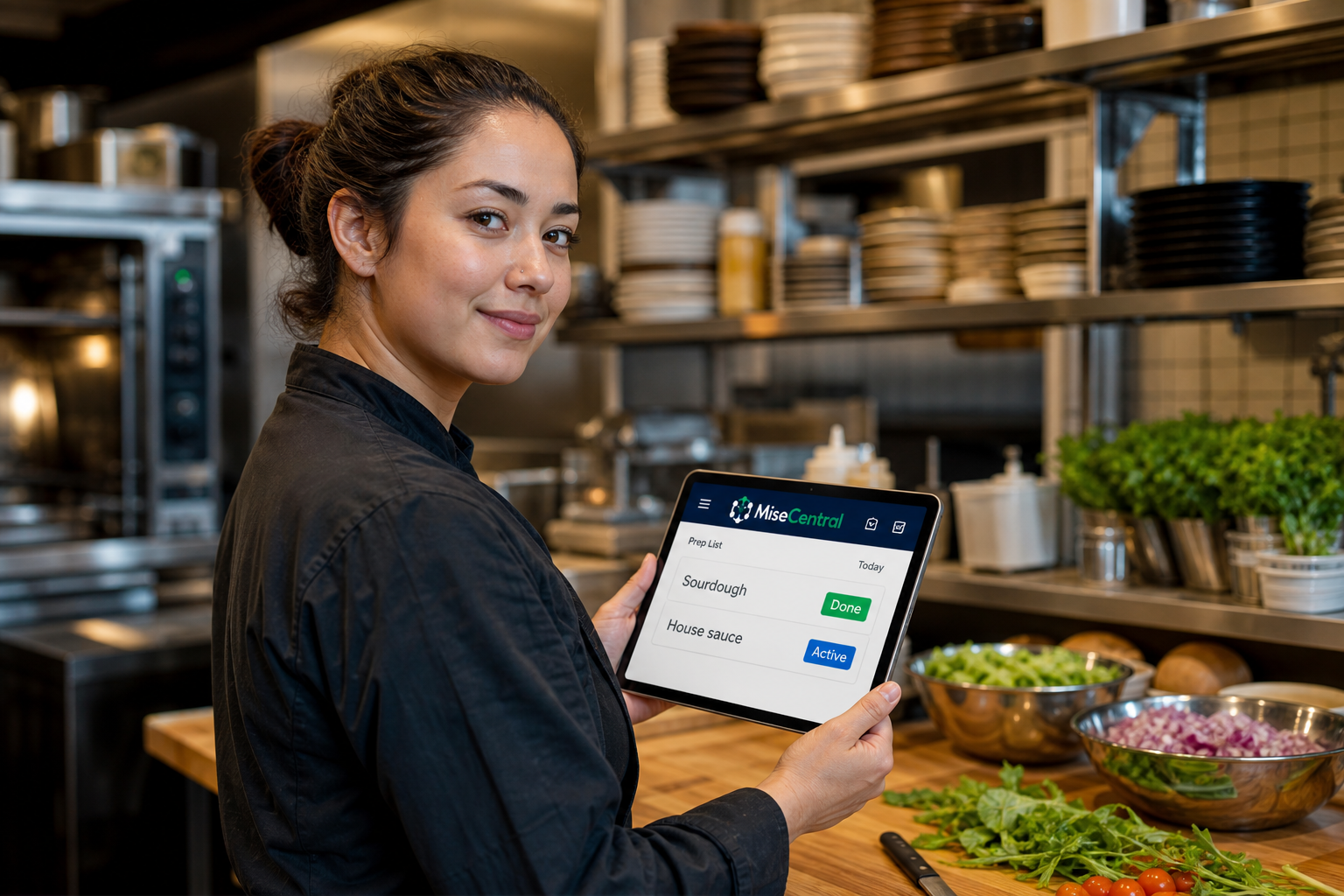
Yesterday informs tomorrow
Actual run times, verification outcomes, and equipment conflicts refine how work is understood next time.

Work Intelligence
MiseCentral Work Intelligence understands how hospitality work is actually performed—phases, equipment, waits, verification, and crew—before staffing recommendations. Leaders approve.

Recipes, receiving, inspections, sanitation — operations create work.
Foundation
Work Intelligence is how MiseCentral understands how hospitality work is actually performed—before anyone opens a schedule. A four-hour braise is not four hours of continuous hands. A banquet prep list creates parallel work, equipment occupancy, and verification windows.
Work Intelligence sees phases, dependencies, equipment, verification, monitoring, timing, constraints, and crew needs. It is the understanding layer of the Adaptive Operating System for Hospitality—the capability that turns operational work into a clear picture of what the day needs.
A different starting point
The best schedule begins with understanding the operation—not copying last week's roster.
Where demand begins
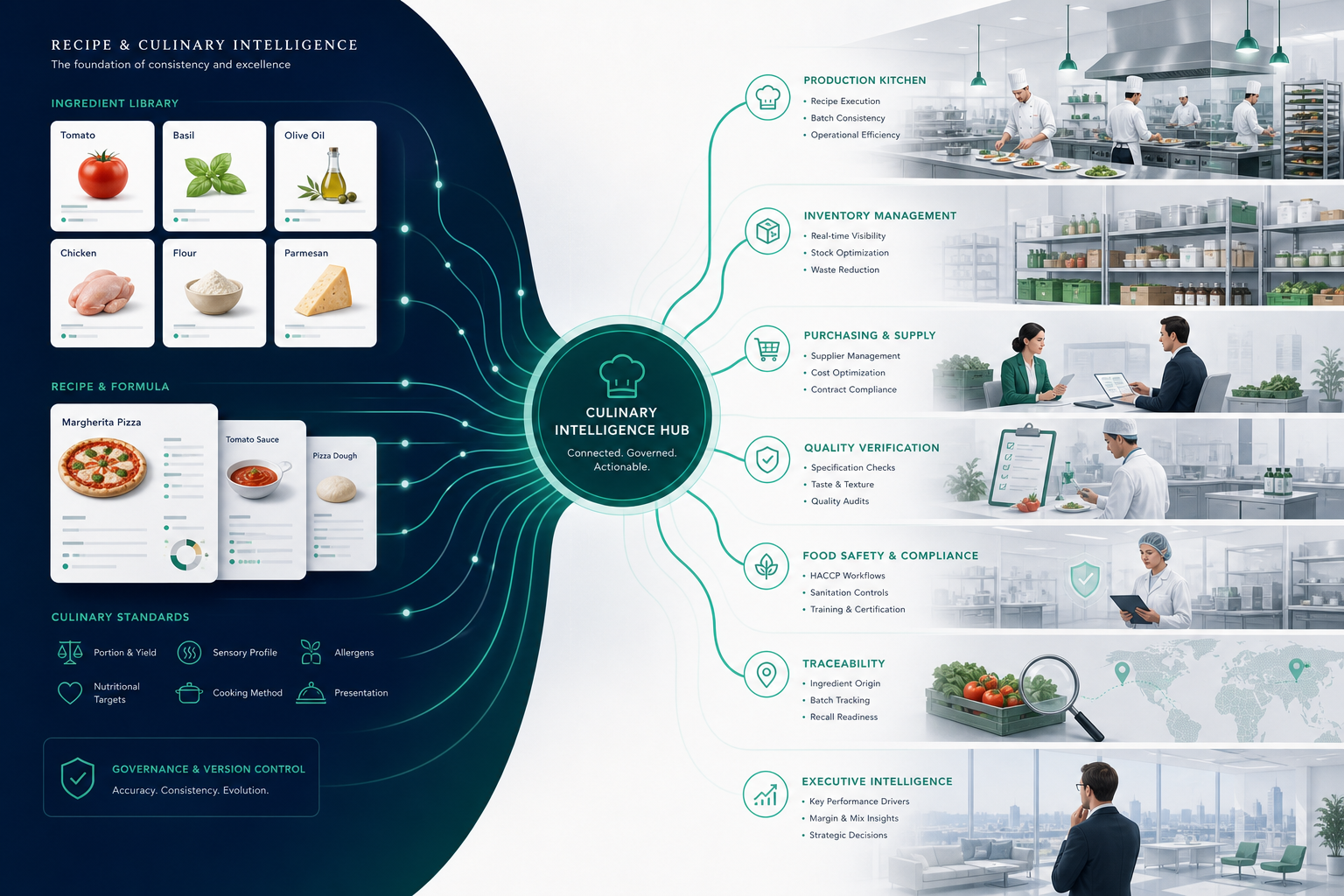
Hospitality is not a blank calendar. Every recipe, dock appointment, inspection, maintenance task, sanitation procedure, and production run creates work—and that work has shape.
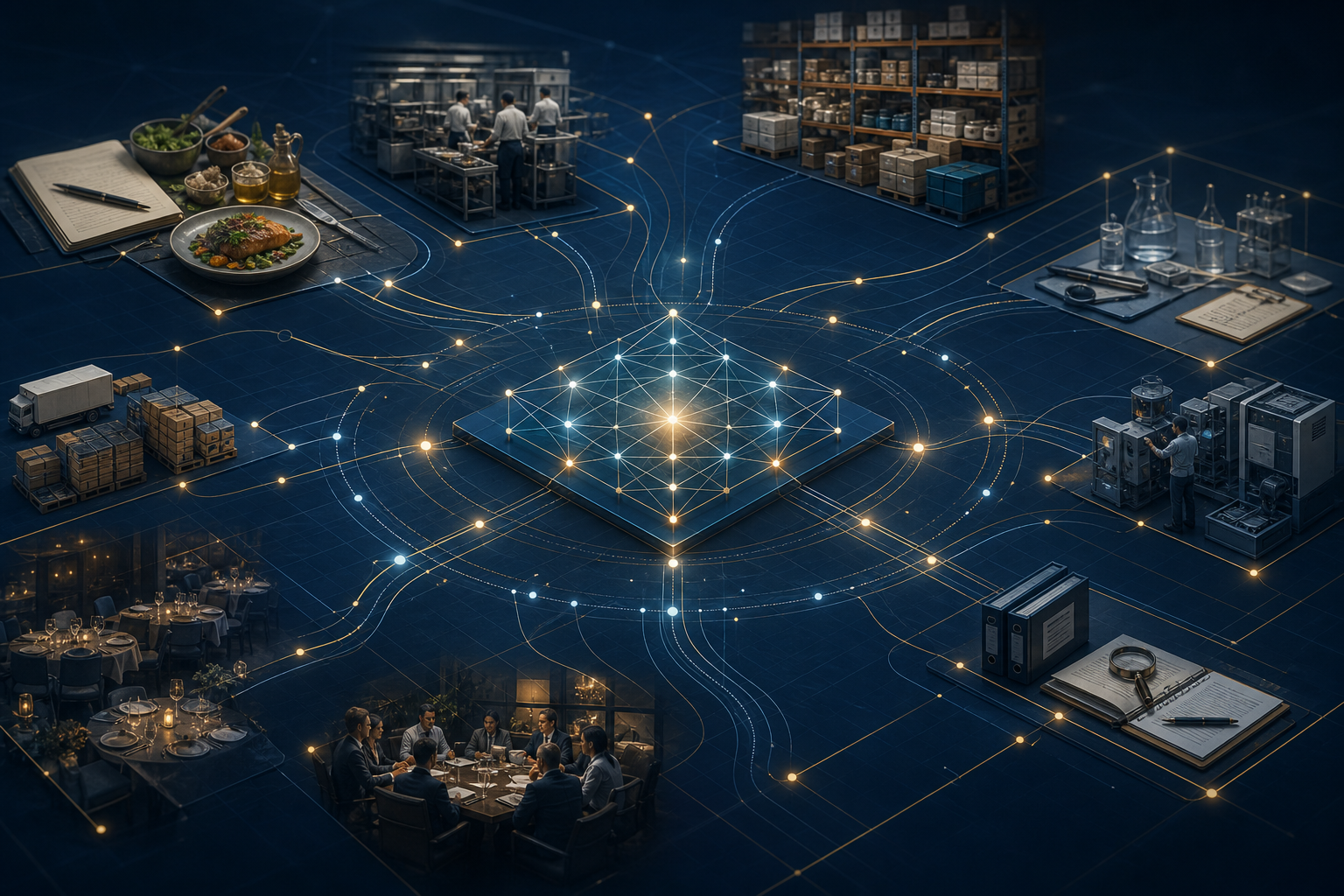
Work Intelligence reads the operational workflows your teams already run:
What the day needs
Understanding work creates a clear picture of what the day needs: labor windows, equipment occupancy, capacity, verification, monitoring, and dependencies—explained, not guessed.
Labor, equipment, verification, and monitoring are not separate tools—they are dimensions of the same demand picture, built from the work itself.

Demand from the work itself
People cover demand
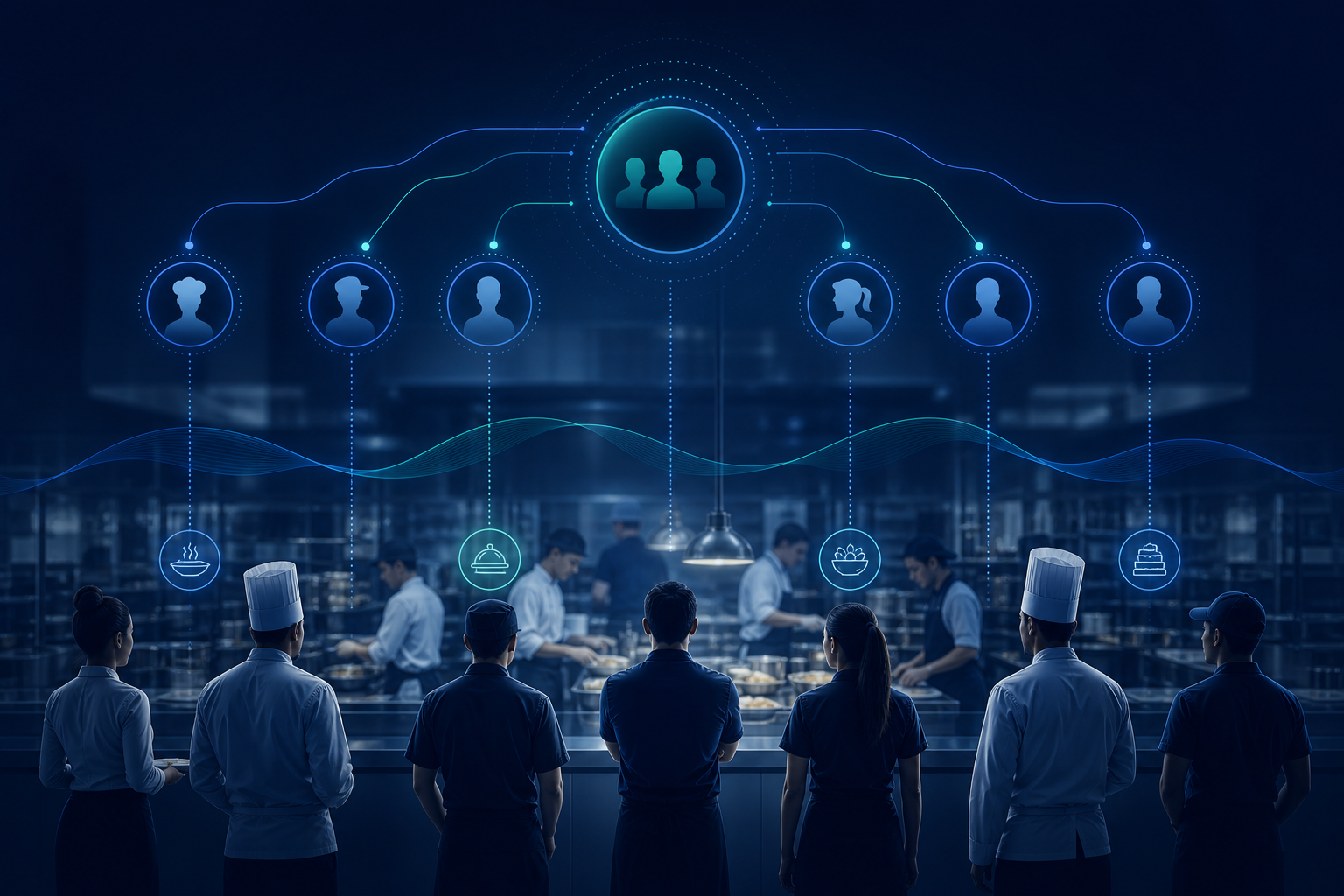
Operational demand becomes staffing recommendations—not mandates. Leaders approve every recommendation. The platform explains why: a two-person transfer, a chiller conflict, a verification window that cannot move.
Leaders approve. The platform explains. Judgment stays on the floor and in the office.
Capacity you can see
The kettle is busy even when the cook is free. A sauce reduces while prep continues elsewhere. A blast chiller holds product while packaging waits.
Work Intelligence models equipment occupancy as part of operational demand—so staffing and production plans respect what is actually available, not what a static estimate assumed.
Checks with a place on the plan
Food safety checks are not afterthoughts squeezed between tickets. Temperature verification, allergen review, and quality sign-offs are planned as part of the work—with labor and timing accounted for.
Work Intelligence schedules verification windows alongside production—so the day does not stall when a check is due.
Work that overlaps
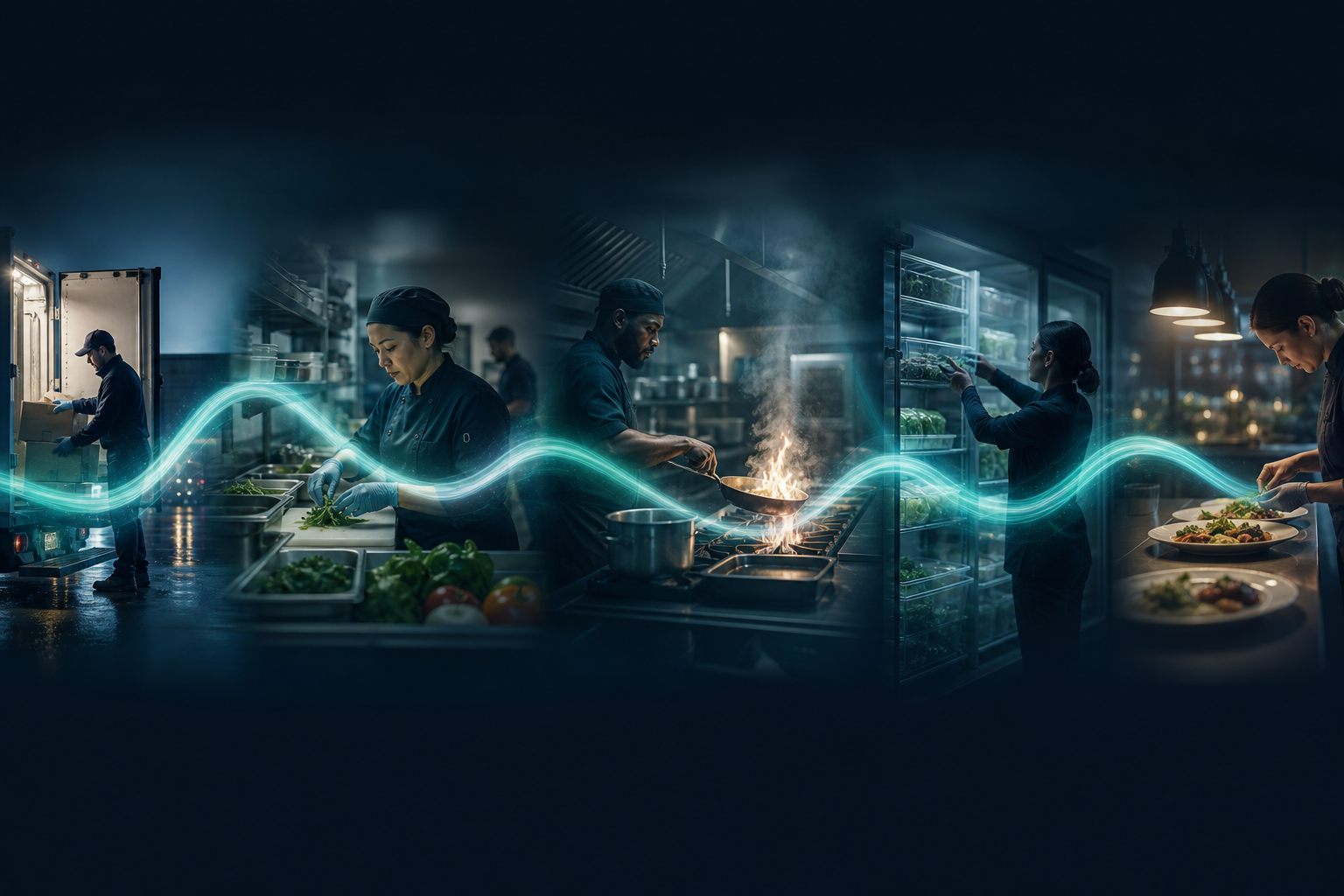
Prep continues while sauce reduces. Receiving overlaps with production. A catering pack-out runs beside banquet prep. Hospitality work is parallel—not a single linear task list.
Work Intelligence understands overlapping work streams, shared equipment, and crew handoffs—so demand reflects how kitchens and commissaries actually run.
See stalls before they stall
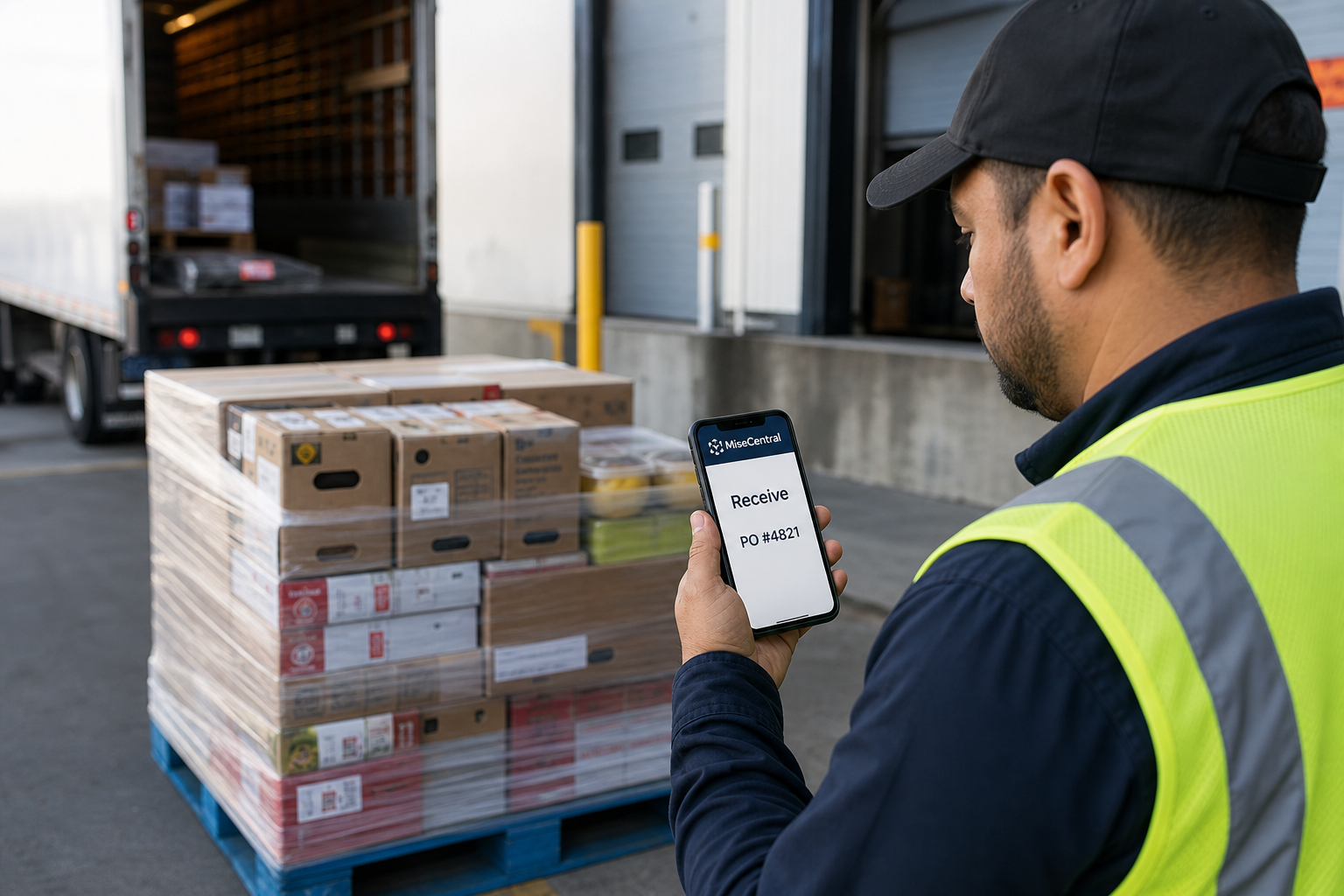
Where will the day stall before it stalls? A chiller at capacity. A two-person transfer with one person scheduled. A verification window that collides with a dock appointment.
Work Intelligence surfaces bottlenecks from operational demand—giving leaders time to adjust staffing, sequence production, or defer work before service pressure hits.
What-if before the shift
What if the blast chiller is down tomorrow? What if the banquet adds fifty covers? What if receiving runs two hours late?
Work Intelligence lets leaders explore scenarios against operational demand—seeing how staffing, equipment, and verification shift before committing the plan.
The living day
Staffing enables production, receiving, and the living day. Work progresses with clearer readiness—and fewer surprises that stall the shift.

What execution reveals
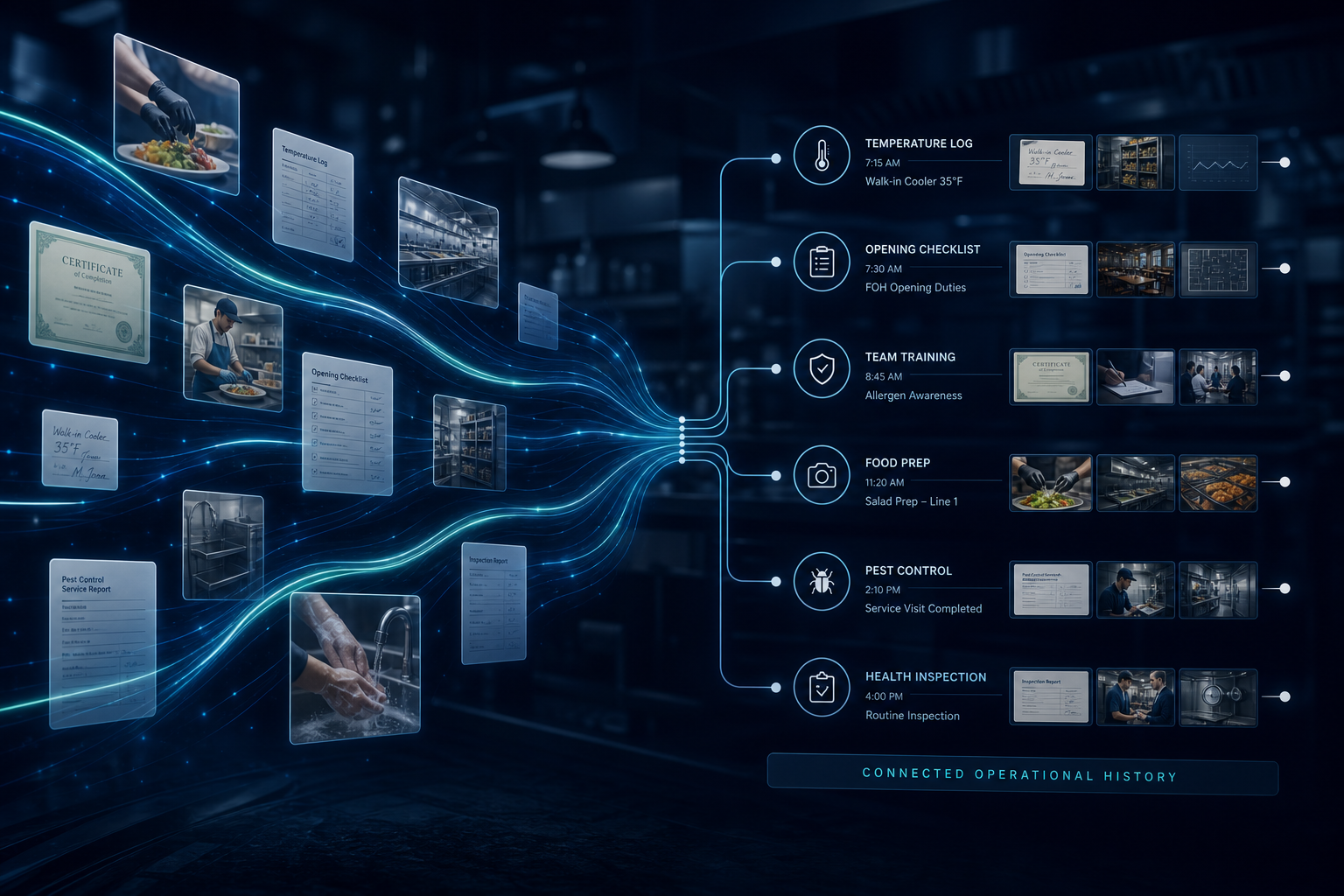
Execution creates findings—variances, delays, verification outcomes, equipment conflicts. Operational Intelligence surfaces what needs attention across production, receiving, quality, and food safety.
Operational intelligence begins with operational understanding. Work Intelligence provides the foundation; Operational Intelligence helps leaders see patterns without drowning in noise.
Advisory, not automatic
Company Brain advises with evidence drawn from operational work and execution. It connects patterns across recipes, production, inventory, quality, and labor—always with explainable context.
Company Brain assists after understanding. People decide. Recommendations include why; leaders approve, defer, or decline.
Tomorrow improves
Operations create work. Work creates demand. Demand creates staffing. Staffing enables execution. Execution creates operational learning—and tomorrow's work improves without gamifying people.
Actual run times, verification outcomes, and equipment conflicts refine how work is understood next time.
Governed recipes and operational standards become reusable understanding across locations.
Learning supports leaders—it does not score individuals or replace accountability.
Always say why
Every staffing and planning recommendation includes a plain-language reason. No black boxes. No mystery hours.
Common questions
Work Intelligence is how MiseCentral understands how hospitality work is actually performed—phases, equipment, waits, verification, monitoring, and crew needs—before recommending who should cover the day. It is part of the Adaptive Operating System for Hospitality, not a standalone scheduling tool.
Traditional scheduling software starts with rosters and static labor estimates. Work Intelligence starts with operational work—recipes, receiving, production, inspections—and builds staffing from what the day actually needs, including equipment occupancy and verification.
Yes. Work Intelligence produces explainable staffing recommendations from operational demand. Leaders approve, defer, or decline. The platform explains why—it never replaces judgment.
Yes. Work Intelligence models when kettles, chillers, ovens, and other equipment are occupied—even when a cook is free. Equipment constraints shape operational demand and staffing windows.
Recipes and production, receiving and inventory, quality checks, food safety verification, sanitation, maintenance, and parallel prep—all the operational work that creates demand across restaurants, hotels, catering, commissaries, and distribution.
Execution creates operational learning. Yesterday's production run, receiving variance, or verification delay improves tomorrow's understanding of work—without gamifying people. Operational Intelligence and Company Brain surface what needs attention; leaders decide.
Human authority
Work Intelligence is part of MiseCentral’s Responsible Adaptive Intelligence story: recommendations with context, human review, then execution and audit — never a black box that replaces judgment.
Book a conversation about how your recipes, receiving, production, and quality work become demand—and how leaders stay in command. Or explore the Adaptive Platform, operational solutions, and Trust Center first.