Curated assortment vs actual sell-through
Premium SKUs occupy prime facing while velocity SKUs stock out—assortment built from buyer instinct, not trailing data.

Gourmet & Artisan Retail — Curation
Curated specialty assortments, high-value SKUs, vendor management, case merchandising, customer guidance, and margin discipline—governed sell-through at the premium shop, not market hall scale or restaurant ingredient supply alone. MiseCentral adapts to how your gourmet retail actually runs: source, receive, curate, merchandise, counsel, and replenish before shrink erodes the story. Every Shelf Tells the Story.

Thursday afternoon: a sought-after olive oil is miscounted in backroom, two premium cheese facings sit empty while slow movers occupy prime shelf space, and a regular asks about origin on a SKU your team cannot trace to vendor lot. The buyer approved last week's assortment—but case map never updated when the seasonal vendor shifted. A specialty market hall runs department scale; an ingredient producer runs wholesale lot release. Your team curates for the premium shop with margin measured in SKU velocity and vendor story, not pallet throughput or market hall foot traffic alone. When purchasing, case merchandising, and customer guidance live in disconnected tools, margin erosion and trust gaps compound before the owner sees a pattern.
Operational Challenges
These are governed premium retail realities—not software gaps. Gourmet shops run on curation, vendor relationships, and case storytelling—not market hall department scale or wholesale lot release alone.
Premium SKUs occupy prime facing while velocity SKUs stock out—assortment built from buyer instinct, not trailing data.
Premium oils, truffles, and specialty items shrink without tie to facing discipline or receiving verification.
Vendor price changes arrive mid-season; margin impact invisible until month-end review.
Display tells one story; backroom on-hand tells another—replenishment not tied to case map.
Staff counsel from memory; origin and pairing questions answered inconsistently across shifts.
Limited releases linger past sell-through window; prime shelf space blocked by slow movers.
High-value cases received without count verification—shrink discovered at cycle count, not at dock.
Directors see revenue; margin by vendor and curated category buried in POS export.
Gift sets and pairing bundles assembled ad hoc—margin on composed SKUs not tracked.
Vendor origin update not reflected on case signage before customer inquiry.
Retail Lifecycle
The operational journey from vendor sourcing to customer guidance at the counter—and how the platform keeps purchasing, receiving, case merchandising, and margin review synchronized. Unlike Specialty Markets, which govern market hall scale across multiple departments, gourmet retail centers the premium shop curation model. Unlike Ingredient Producers, which govern wholesale lot release, gourmet retail centers in-store counsel and case sell-through.
Vendor profiles, seasonal availability, and margin targets—buying decisions tied to curated category strategy, not last season's spreadsheet alone.
Limited-run and artisan producer SKUs flagged for rotation windows before case authorization.
Every Shelf Tells the Story starts with vendors your team can actually counsel on—not SKUs bought on margin alone.
Premium cases counted and logged with vendor lot—short shipments and quality flags block case stocking before shrink hides in backroom.
Purchasing ties received cost to active vendor contract; drift triggers margin review.
Inventory connects receiving to case map—not warehouse counts divorced from facing discipline.
Category facings, velocity tiers, and seasonal rotation—case map reflects curated strategy, not whatever arrived last.
Slow movers flagged for markdown or vendor return before prime shelf space blocked another week.
Curation separates gourmet retail from Specialty Markets department scale—one shop, one story.
Shelf layout, facing counts, and cross-category pairing zones—display reflects authorized assortment map.
Empty facings flagged against par before weekend peak; replenishment pulls from verified backroom on-hand.
Case discipline is the gourmet scorecard—not warehouse fill rate.
Origin, pairing, and allergen counsel backed by active vendor profile and recipe version—not shift notes alone.
Substitution suggestions visible when primary SKU stockout; margin on recommended alternative visible to floor lead.
Customer guidance is retail counsel—not Ingredient Producers wholesale specification sheets.
SKU velocity by category, vendor, and facing tier—patterns visible before seasonal buy, not buried in month-end export.
Company Brain surfaces when the same premium oil SKU stockouts three consecutive weekends without par adjustment.
Reporting connects sell-through to next buy—not POS totals alone.
Vendor cost changes, promo alignment, and return windows—margin by vendor visible before next seasonal buy.
Underperforming vendor SKUs flagged for rotation or exit with evidence, not buyer memory.
Purchasing sized to case velocity—not last month's average.
Gift set and pairing bundle recipes versioned—component cost and margin on composed SKU visible at assembly.
Seasonal bundle authorization tied to component on-hand; stockout on one item blocks release.
Composed retail SKUs differ from Cheese & Charcuterie Retail cut-to-order—bundle margin governs assembly.
Shrink by SKU, vendor, and facing tier—patterns visible before owner review, not discovered at physical count.
Theft and damage on high-value SKUs tied to receiving verification and facing audit trail.
Shrink review feeds the next assortment plan—continuous loop, not quarter-end surprise.
Second location, expanded vendor program, or e-commerce crossover—Business Review suggests inventory depth, purchasing intelligence, and Company Brain velocity alerts with evidence.
Your business data stays yours—operational intelligence grounded in your curation strategy and case sell-through.
Shelf readiness is proven across seasons—not heroics when vendor availability shifts mid-buy.
Core Capabilities
Turn on what you need today. Add vendor intelligence, multi-location curation, and Company Brain velocity alerts as your shop grows—without starting over.
Batch salads, sides, and value-added prep tied to case pars and party tray demand—not back-of-house prep divorced from sell-through.
Learn More →Bake schedules, batch runs, and proofing windows aligned to display pars and daypart demand—not plant throughput alone.
Learn More →Temp custody, rotation alerts, and food safety records tied to case and counter—not binders reconstructed at audit.
Learn More →Daypart crew, bake windows, and counter coverage aligned to peak sell-through—not static weekly templates.
Learn More →Versioned formulations for salads, batters, and counter products—ingredient changes propagate to labels and case signage.
Learn More →Lot genealogy from receiving to case label—recall readiness and customer origin questions answered in minutes.
Learn More →Shrink, sell-through, and margin by department, daypart, and SKU—directors see patterns before month-end surprise.
Learn More →Guidance as you add departments, stores, and programs—what to enable next, always with an explanation why.
Learn More →Operational intelligence across shrink, rotation, and replenishment—with evidence before your team acts.
Learn More →Gourmet and artisan retail runs on governed case pars and backroom discipline—not warehouse counts divorced from the shelf story. Inventory carries curated assortment maps, facing pars, high-value SKU verification, replenishment authorization, and sell-through windows tied to vendor rotation. It connects what purchasing ordered to what receiving verified, what the case displays, and what customer counsel references at the counter. Pars flex from trailing velocity and seasonal flags; slow movers trigger markdown review before prime facing blocked another week. Purchasing aligns vendor orders to case velocity; Traceability answers origin questions in minutes. Recipes version composed bundle formulations. Quality gates hold windows on perishable curated SKUs. Company Brain recommends facing changes when truffle oil stockouts rise three consecutive weekends after seasonal vendor shift—and explains why before the next buy. Reporting closes the loop for owners who need margin by vendor and category in every review.
Learn More →Operational Models
Gourmet operators combine specialty foods, wine and beverage, gift curation, and artisan producer programs. MiseCentral composes around all of them at once.
One shop may run seasonal import program, daily cheese counter, and gift bundle assembly—all on one assortment map. The platform adapts to each model without separate systems per category.
Workspace Examples
One Business Profile creates the workspace each person needs—from owner to buyer, floor lead, receiving clerk, QA, and operations director.
Company Brain
Company Brain learns from your real shop—velocity patterns, vendor margin drift, facing gaps, and curation misses. It recommends; your team decides. Every suggestion includes the why. It's Not Artificial. It's Adaptive.™
 Company Brain
Growth Journey
From your first curated shelf to a multi-location gourmet network—MiseCentral stays with you. Business Review suggests what to enable at each stage, and always explains why.
One platform. No migration. Your team keeps the workflows they already trust.
Business Review notices margin drift on new vendor SKUs and suggests Inventory with Purchasing—vendor cost tied to facing par before case authorization.
When two shops share vendor relationships, Review recommends Traceability and assortment sync—curated map visible across locations without duplicate buy sheets.
Third location online? Review guides Reporting by vendor and category and Company Brain velocity intelligence across shops—not isolated spreadsheets per store.
Gourmet plus cheese counter and specialty market crossover? Review connects premium shop curation to adjacent formats—explore Cheese & Charcuterie Retail and Specialty Markets on the same platform.
Industry Ecosystem
Gourmet retail intersects specialty markets, cheese counters, and ingredient supply—cross-link where your curation model and customer promises overlap without duplicating market hall or wholesale workflows.
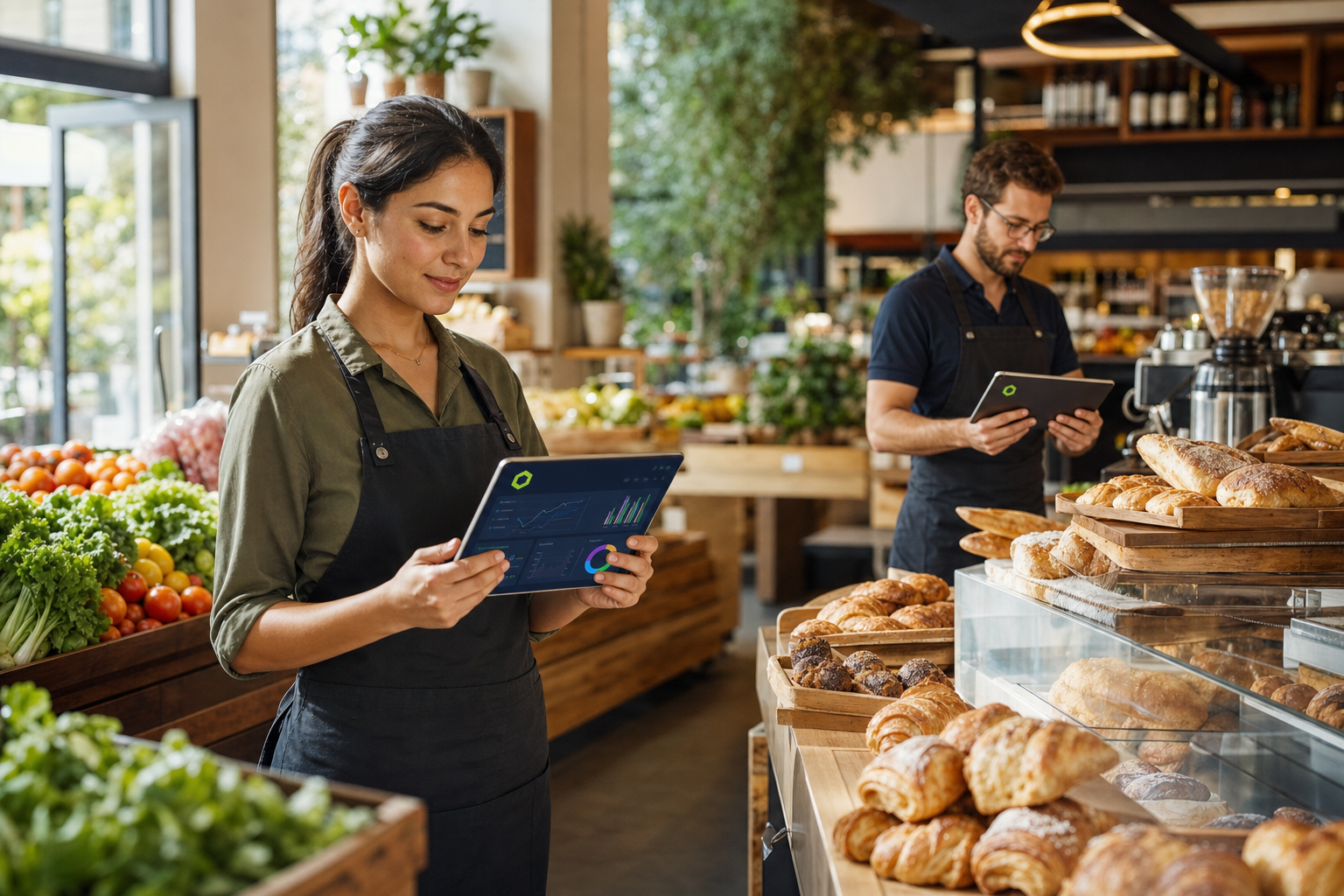
Market hall scale across produce, protein, prepared, and specialty departments—specialty markets govern multi-department coordination; gourmet retail governs premium shop curation and vendor storytelling.
Specialty Markets →
Cut-to-order cheese counter and charcuterie case—cheese retail governs aging, rotation, and board SKUs; gourmet retail governs broader curated assortment and vendor curation.
Cheese & Charcuterie Retail →
Wholesale ingredient manufacturing and lot release—ingredient producers govern plant supply and distributor shipment; gourmet retail governs in-store counsel and case sell-through.
Ingredient Producers →
Gourmet retail anchors the Specialty & Premium group—explore specialty markets, cheese counters, and fresh food markets on the hub.
Specialty Markets — Fresh Food Markets
Retail Food Hub →Specialty Markets coordinate market hall departments at scale; gourmet retail curates the premium shop story—different operating model, same platform when you operate both. Wholesale supply stays in Ingredient Producers; case counsel stays here.
Retail Food Family
See how MiseCentral adapts to your curation, your vendor relationships, and where your gourmet retail is headed next.
Retail Food Hub Specialty Markets Cheese & Charcuterie Retail Ingredient Producers Capabilities Contact
