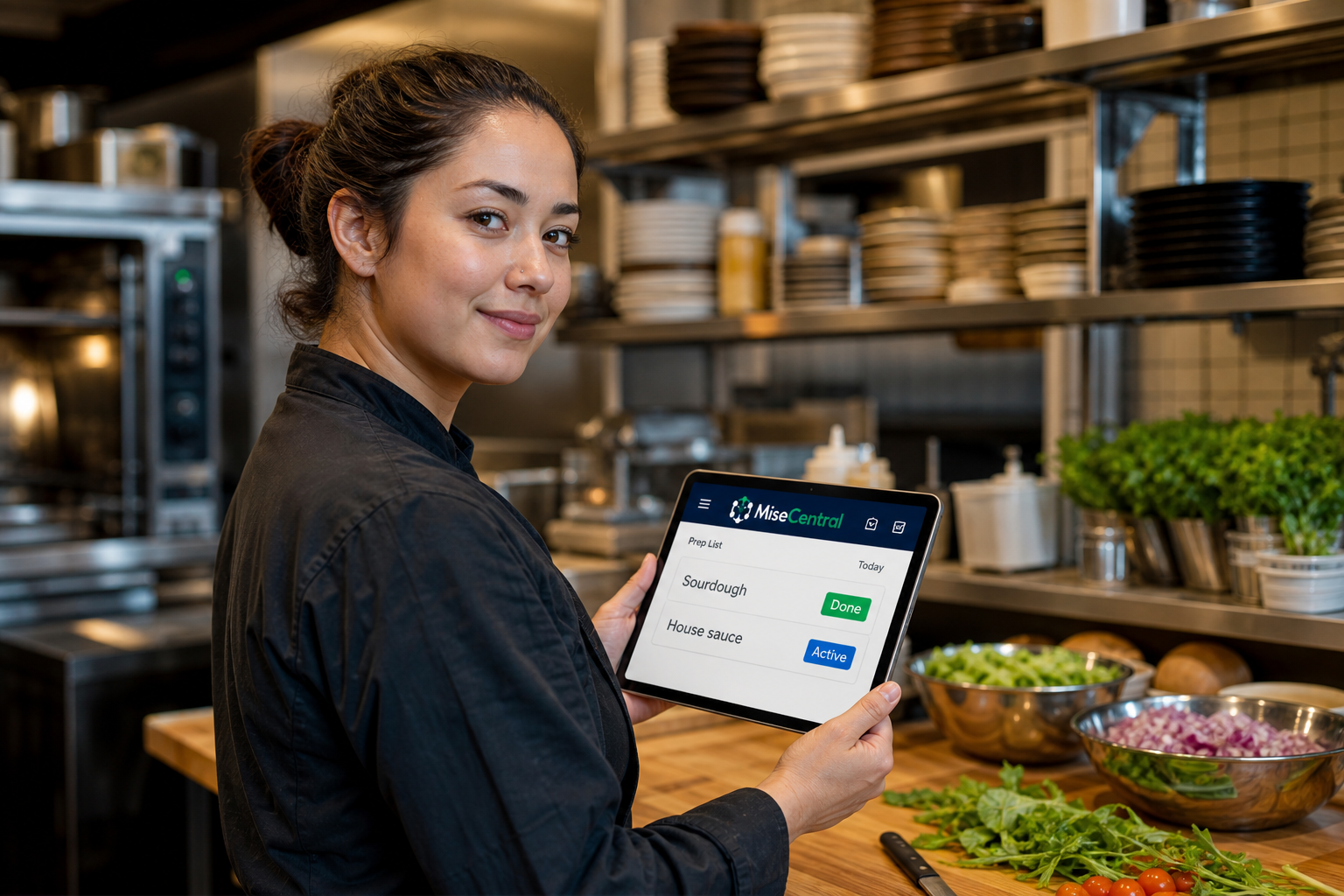
Before the shift
Start with clarity
See the production need, the approved recipe, and whether the ingredients are on hand before the team is already in the work. Store orders, prep sheets, and a released production order are available today.
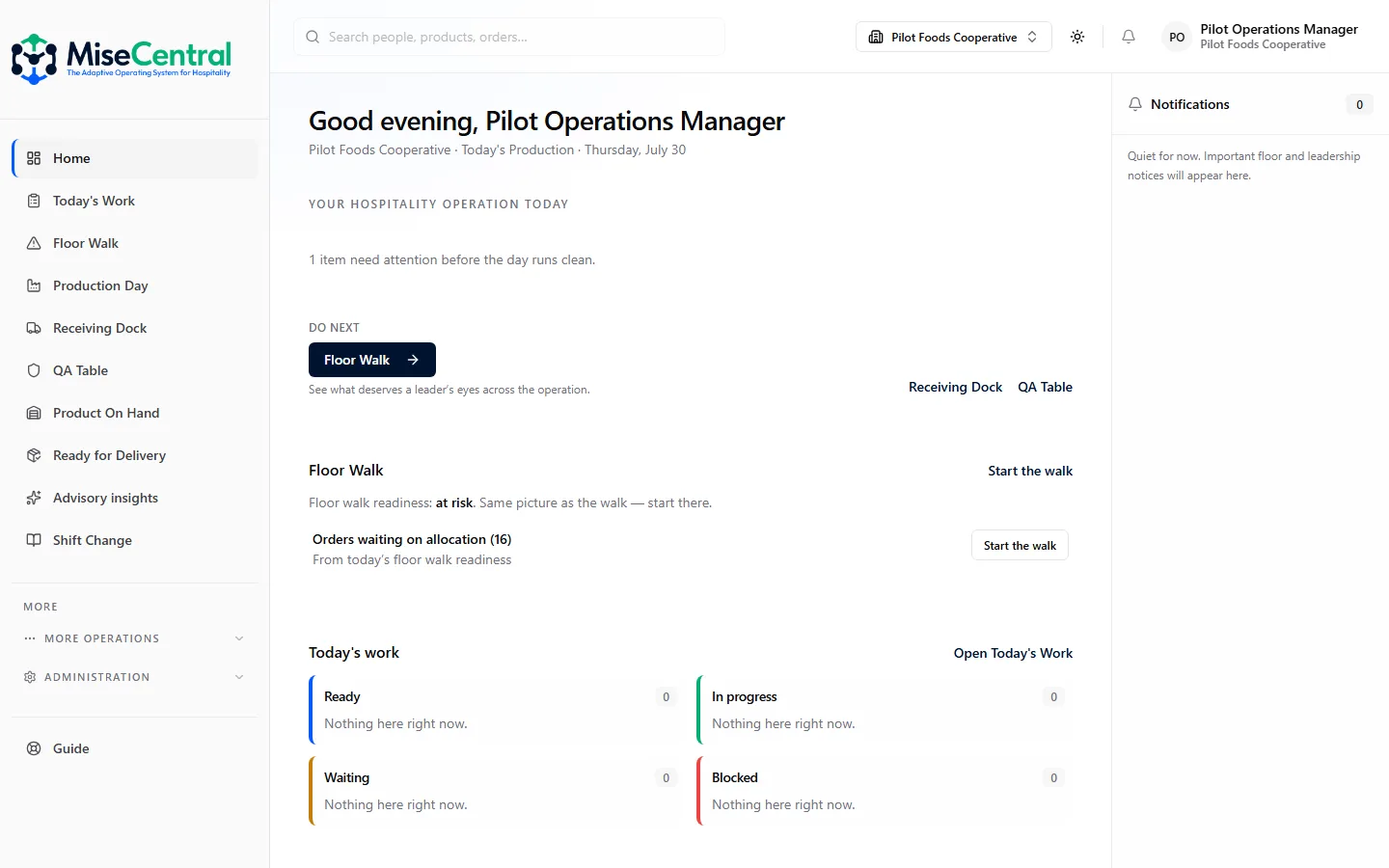

Chefs, commissaries, and hospitality operations
One connected operation. From the first plan to the final handoff.
Know what needs to happen. Keep the team aligned. Understand where the shift stands.
Now accepting beta partners.
The Adaptive Operating System for Hospitality.
The day as it actually is
A manager is still responsible for quality, consistency, and the deadline while the information needed to run the shift is scattered across messages, spreadsheets, and paper.
A better way to run every shift
Before the shift
See the production need, the approved recipe, and whether the ingredients are on hand before the team is already in the work. Store orders, prep sheets, and a released production order are available today.
During the shift
A physical run can be started, and the ingredients actually used can be recorded against the source lot. That is the production record available now. It is not a finished-goods inventory post.
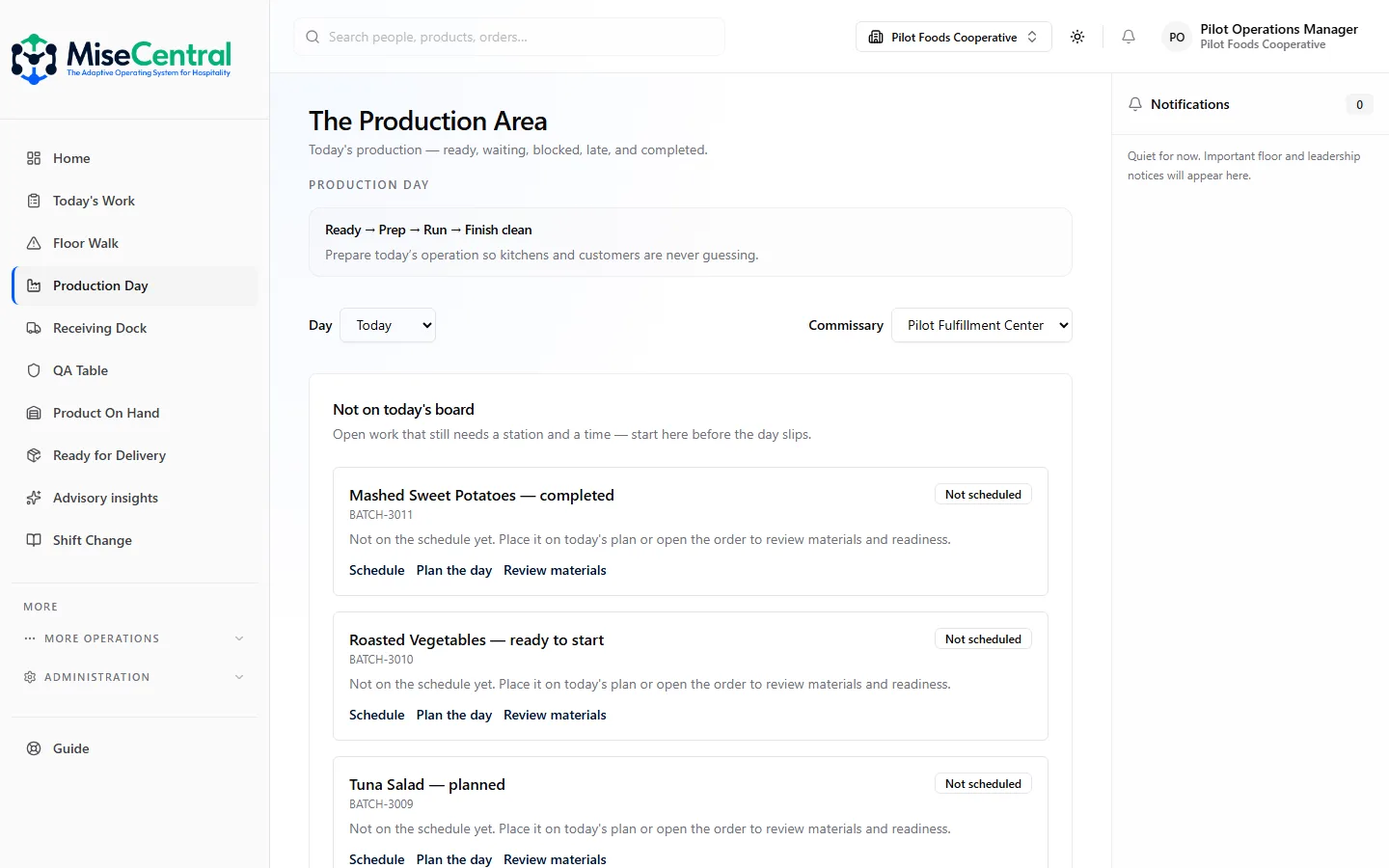
When plans change
Priorities move. MiseCentral is built so a person can adjust the plan and the production need without losing the recipe or the lot that was used. The system does not silently rewrite the plan, and it does not decide for the chef.
At the end of the shift
You can see what was started and which ingredients were used. Marking the run finished, posting finished inventory, and deciding what may ship are still ahead. Cooling, critical control checks, and release before product is issuable are on the priority roadmap.
The point of the day is the work, not the hunt for the work. MiseCentral is designed so a manager can spend more of the shift directing people and protecting quality.
These are the outcomes the product is built toward. They are not measured customer results.
One connected operation
Teams should not have to translate a spreadsheet into a recipe, then into a production note, then into a guess about which lot was used.
Quality hold is available as a foundation. Recall readiness starts at the ingredient lot and the batch. It does not yet follow a shipment to a destination. People and Execution — skills, scheduling, and coverage — is a priority roadmap, and supervisors remain the ones who decide. Fulfillment, billing, and finished inventory are later capabilities, not part of the path above.
Built for the people running the business
More clarity before the shift and a straighter line from the recipe to the batch. The language of the product is production, not a software catalog.
Coordination across the people and locations you already run, without pretending every site follows one rigid process.
Visibility into what was planned, started, and used. Accountability that comes from the work, not from a separate report someone rebuilds later.
A quality hold can sit on the operation. Cooling checks, critical control verification, and release before stock is issuable are on the priority roadmap.
What supports the day
Planning, prep sheets, production orders, and a physical run the team can start.
Use it to know what should be made before the line is already short.
Recipes and approved revisions.
The batch follows the revision that was approved, not a loose note from last week.
Receiving, on-hand inventory, and store ordering.
See what arrived and what is available before you commit the day. Guided setup can help bring an Order Guide. Imports stay drafts until a person reviews them.
Ingredient consumption tied to the source lot and the batch.
The trace that exists today stops there. It does not follow a shipment.
Quality hold foundation.
A hold is not a full quality-release workflow. Release before product is issuable is still ahead.
Skills, scheduling, coverage, and task time.
Not available as a live staffing product. Supervisors decide. Recommendations do not assign the shift by themselves.
Company Brain can observe and recommend.
When MiseCentral does not have evidence, it leaves the picture empty. Unknown stays unknown. It does not silently change plans, rewrite standards, or overrule a quality decision.
Built for real food operations
MiseCentral is shaped around the workflow you run. It is not a single process every organization must adopt, and it is not a claim that every outside system already connects. Food production belongs here. Not a complete MES.
Work creates the record
When the batch and the ingredients used are captured as the work happens, the team spends less of the close reconstructing the day from memory. That supports documentation and accountability. It does not guarantee regulatory compliance, and it does not file anything with a regulator.
Bring clarity to your day, coordination to your team, and confidence to your operation. Request a conversation through the contact form. A demo is a follow-up with our team, not an instant booking.
Prefer to look first? See How It Works, or Join the Beta. Applications are reviewed. Submitting does not create an account.